

Part I: Most Grocers Say Omnichannel. They’re Actually Running Multichannel.
By Matt Van Gilder, VP Omnichannel, NexChapter
This past fall conference season, I started to write down all the different titles I was seeing in the digital retail space. Head of Digital Commerce, Director of Connected Commerce, VP of Omnichannel, Manager of Unified Commerce. And of course, the classic: Director of eCommerce.
The terms get used interchangeably as if they are the same thing, but are they? I decided to take a deeper look and see whether I could figure out if we are just looking at synonyms or if there are practical and useful differences across these terms. I started by defining a few of the top terms I had seen: Omnichannel, Unified, and Connected. And through this process I uncovered just how some of this stuff fits together.
Omnichannel commerce: what the customer sees
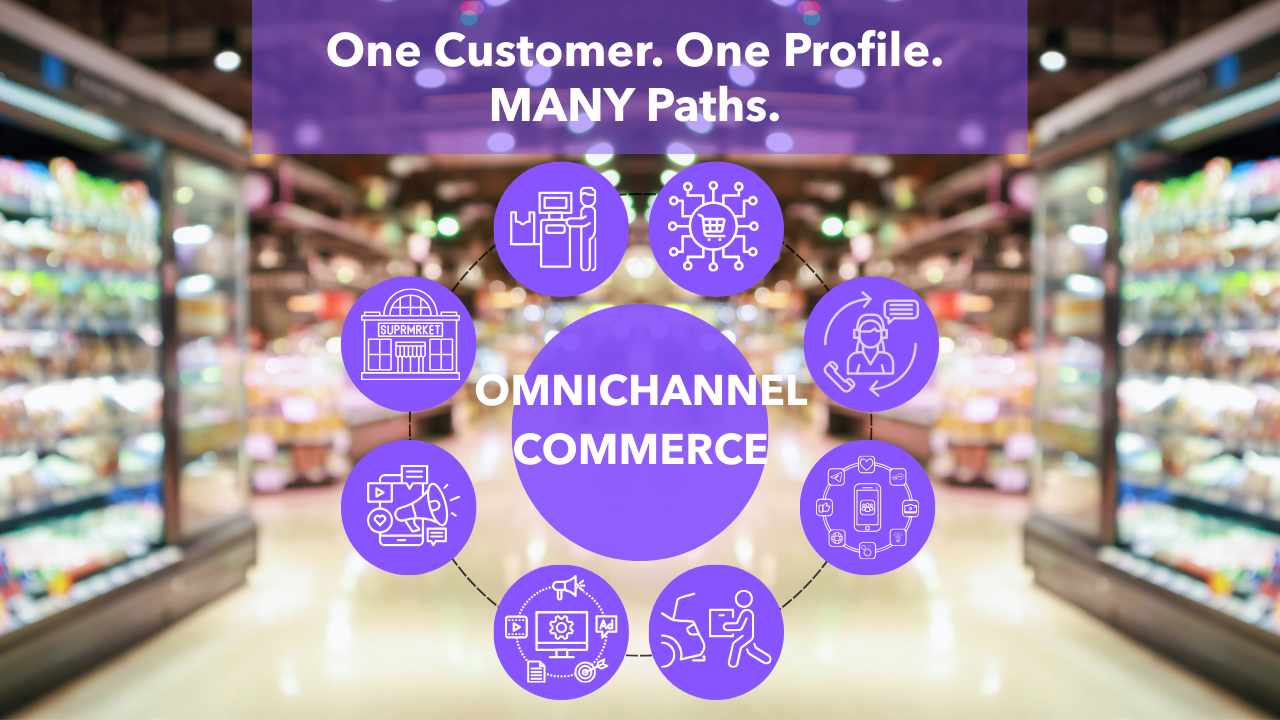
Omnichannel commerce at its core is about giving shoppers a consistent, low-friction experience across every touchpoint. One customer. One profile. Many paths. Consistent experience.
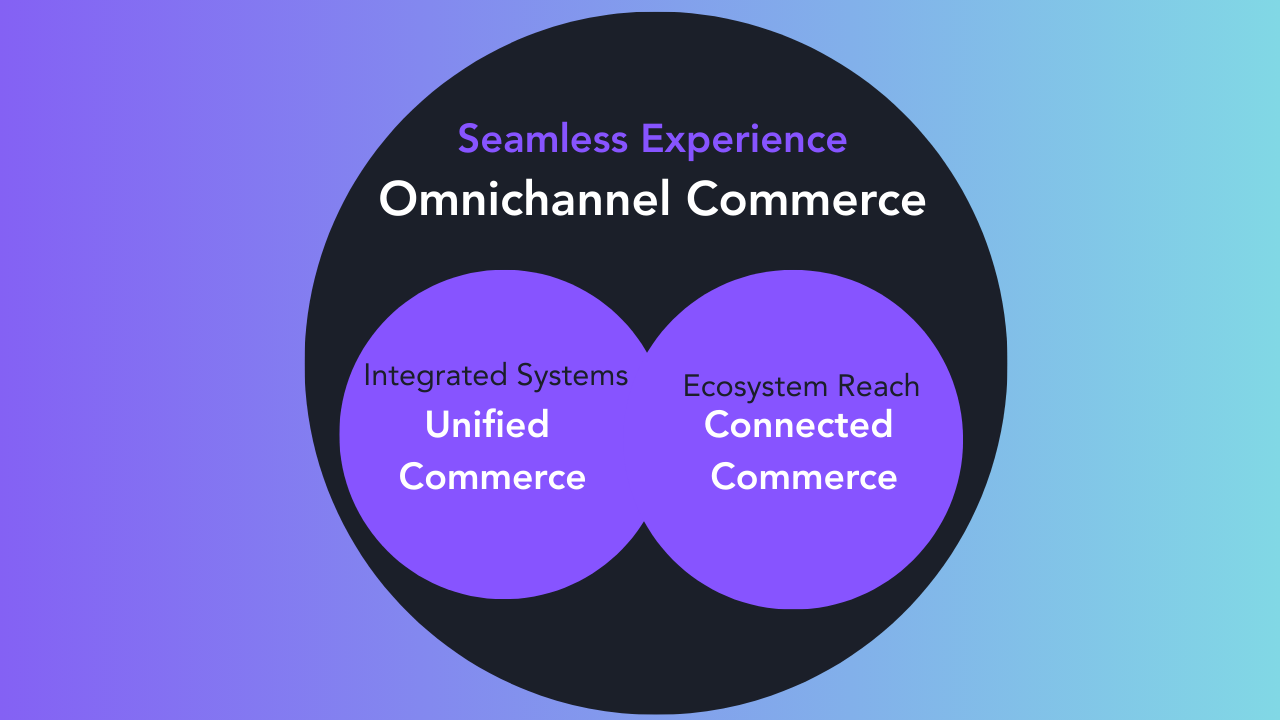
Omnichannel commerce is not one thing. It is the combination of a unified foundation and a connected ecosystem.
Most retailers today believe they are moving toward omnichannel, but in reality most are operating in a multichannel state. Channels coexist, but they do not behave like one business. Prices drift, loyalty earns differently depending on the surface, data updates in one place but not the other. Customers never think in channels. They think, 'I shop you.' That gap is where friction lives. Naming unified and connected commerce is not a vocabulary exercise. It is a way to see where clarity cracked, and how to rebuild it intentionally. Think about buy online pickup in store. Loyalty that works in the app, online, and at the register. Digital coupons that apply anywhere. Those are table stakes for omnichannel commerce and should be consistent and dependable.
Unified commerce: what the retailer needs
If omnichannel commerce is about how the customer experiences their journey with you, then unified commerce is how it all works.
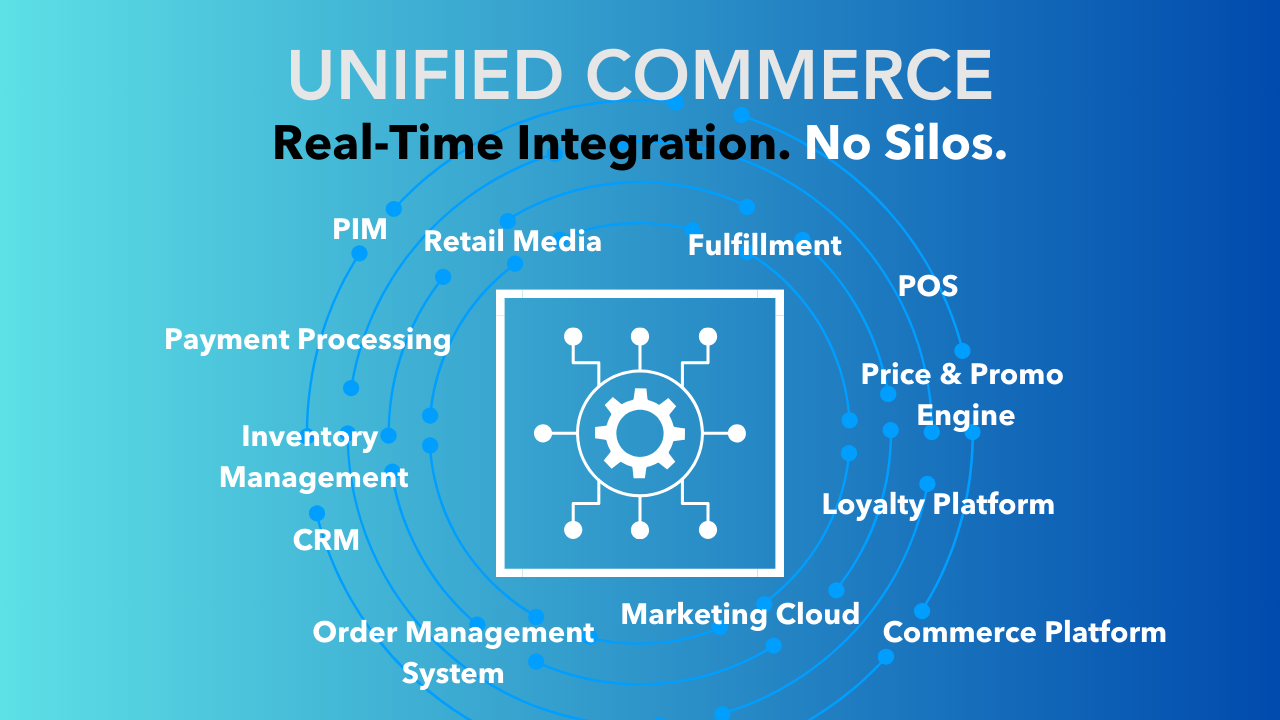
Unified commerce is the architecture that removes silos between systems. Point of sale. Inventory. Order management. CRM. Loyalty. Fulfillment. All connected to one real-time source of truth.
Many retailers try to make omnichannel “work” today with middleware, manual steps, duct tape, and heroic effort. It can function, but it is slow, labor intensive, and fragile.
The aspiration of unified commerce is to turn that juggling act into an integrated and cohesive system. Unified systems improve accuracy and speed for customers and frees up teams to focus on higher value work. It sets the stage for smarter decisions, cleaner data, and faster reaction to customer and market changes.
Connected commerce: naming what is already happening, plus what is next
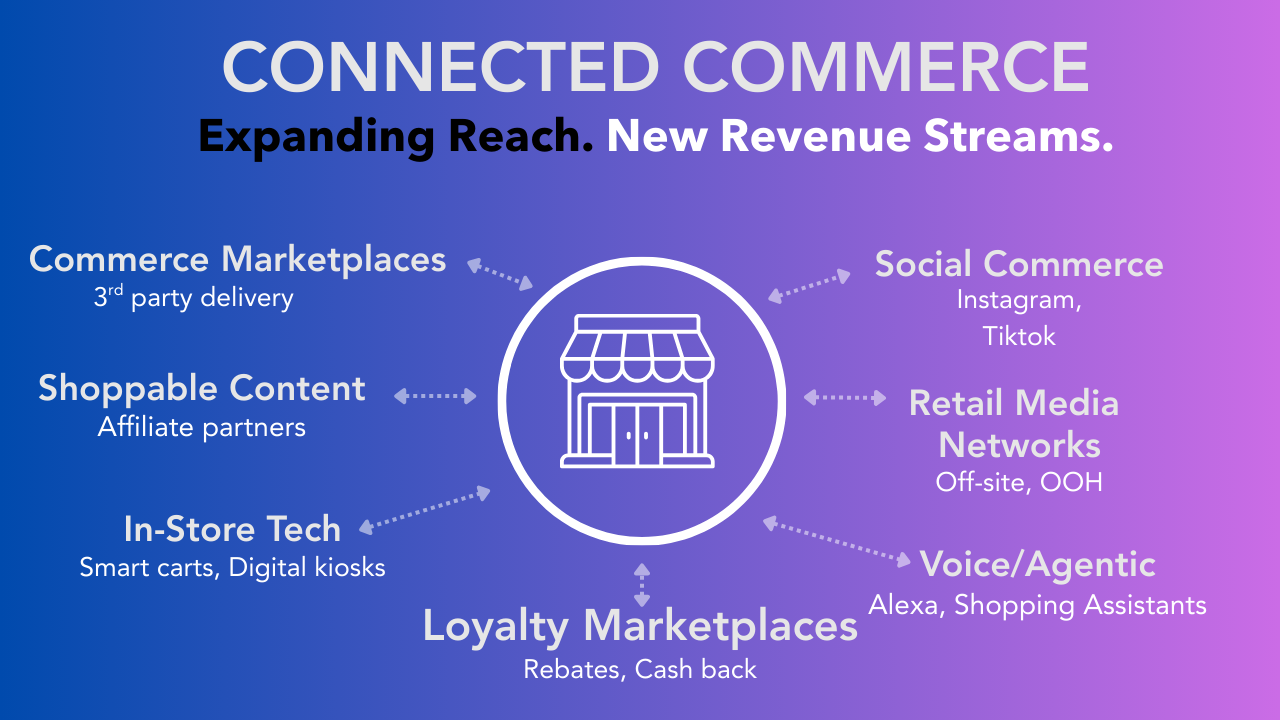
If unified commerce connects your internal systems, connected commerce connects you to the outside ecosystem.
Most grocers already participate in third-party ecosystems, including marketplaces like Instacart and savings platforms like Ibotta. Retail media networks. Affiliate or shoppable content. That is connected commerce in practice, even if we did not use the label.
What is emerging now is the rest of the canvas for connected commerce:
Smart carts and in-store digital kiosks
Voice assistants and agentic shopping
Social commerce and shoppable media
Deeper marketplace and media integrations that expand reach and attribution
So, is connected commerce new? Partly. It is also a useful way to formalize the external side of the strategy. Unified commerce looks inward and simplifies how you operate. Connected commerce looks outward and expands where you show up.
Why the distinction matters
Here is the simple map that keeps everyone aligned.
Omnichannel commerce is the customer experience. A seamless journey across channels, supported by unified systems and connected touch points.
Unified commerce is the operational engine. Integrated systems that deliver accuracy, efficiency, and scale.
Connected commerce is the ecosystem layer. Extends reach across partners, platforms, and emerging digital surfaces.
The main takeaway I learned from this definition exercise is that omnichannel commerce is a spectrum, which unification and connectedness are both a part of. To truly get omnichannel right, you must work towards both unified commerce and connected commerce together.
The multiple channels you manage are real, but unified and connected are the system beneath them. Think of unified commerce on one axis, connected commerce on another. Where you fall on each determines your omnichannel maturity. Build a unified foundation that serves your core customer effectively and accelerate into the connected eco-system, where incremental transactions and new monetization models live.
The terminology matters because it gives us a shared language. And shared language is how we start fixing what's broken.
What matters most is creating experiences that work for customers and associates at every touchpoint. When retailers align around that goal, and understand the difference between unified and connected capabilities, omnichannel stops being a buzzword and starts being a way of running the business.
And maybe one day, when all of this becomes second nature, we will drop the 'omnichannel' qualifier entirely. We will simply talk about commerce, delivered well.